order, Iron Bison Resilience: A Manual for Tactical Maintenance, now available on amazon
Rust, Resilience, and the Cortisol Monster
Because stress releases cortisol that acts as "rust" on our resilience tools and worsens chronic pain, this post argues for managing internal reactions rather than agonizing over unavoidable external factors. By adopting the "Would it help?" mindset from the movie Bridge of Spies, the author suggests we can stop feeding the "cortisol monster" and better maintain the tools needed to cope with pain.
Thomas E Gripp
3/15/20262 min read
Title: Rust, Resilience, and the Cortisol Monster
You can’t avoid stress. It is everywhere—in work and even in play. It happens while driving your car or riding the subway. It comes with change, both good and bad.
Stress is the ally of chronic pain. It flushes cortisol into our bodies, making managing our chronic pain much more difficult. Yes, cortisol helps regulate stress, but too much of anything is harmful to the body. So, if stressors are everywhere, how do we manage stress to reduce the impact it has on our pain?
We have to address how we internalize the stress. We can’t avoid paying the bills or the mortgage. We can’t tell the Chief not to hand us any more assignments, or that the latest initiative will be a bust.
So, what can we do?
Manage the stresses that are within our grasp.
Does it do any good to be angry at the alarm clock in the morning because you didn’t go to bed until midnight? That causes stress. Does it do you any good to rage at the guy who cut you off in traffic? No. That jackass doesn’t care; he’s gone, he’ll do it again… and you are left feeding the cortisol monster.
Does it help to worry about the outcome of a college football game on Saturday or the NFL on Sunday? It doesn’t even help to worry about the rising cost of gasoline or groceries.
Adapt to it. Don't let worry feed the cortisol monster.
Contain the anger and contain the worry. Bit by bit, moment by moment, you lower cortisol and take some of its power away. You have used a forging tool to cope with your pain.
In the movie Bridge of Spies, Mark Rylance gives an incredible performance as Colonel Abel, the jailed Russian spy. His appointed American attorney (played by Tom Hanks) is confounded by the spy's lack of concern after delivering news that should provoke profound dread.
At least twice, Hanks' character inquires whether the possibility of death—once by the US, the second at the hands of his own people—made Colonel Abel worry.
Colonel Abel’s deadpan answer each time was: “Would it help?”
I never thought I would learn a lesson from a character based on a real Soviet spy, but I have. Worrying doesn’t help; it just causes undue stress. Stress equals cortisol being pumped into the systems that we don’t need, damaging our tools.
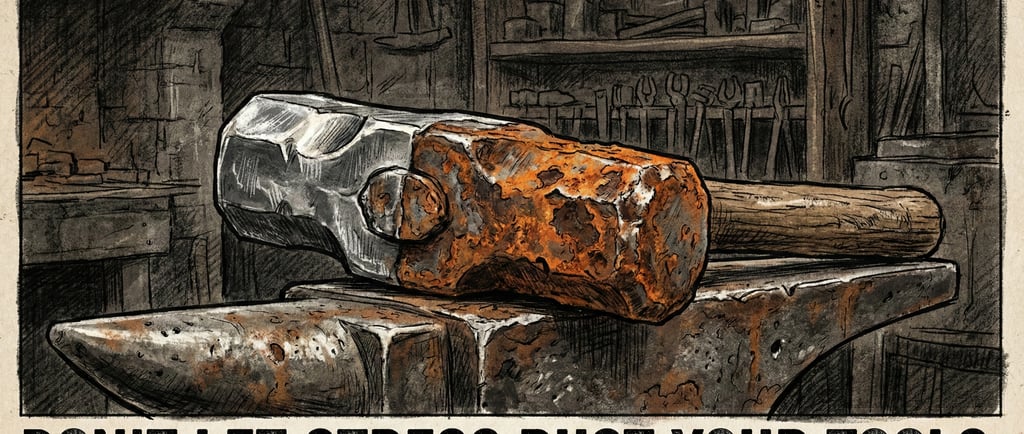
In the parlance of Iron Bison Resilience, cortisol is the corrosion and rust that makes our forging tools ineffective.
Connect
Join the Iron Bison Herd for support and guidance.
CONTACT:
help@ironbisonresilience.com
913.205.5621
© 2025. All rights reserved.