order, Iron Bison Resilience: A Manual for Tactical Maintenance, now available on amazon

The Light Duty Trap: Why We Must De-Weaponize Recovery in Public Safety
This blog post argues that treating light duty as a "penalty box" causes dedicated first responders to hide injuries, turning minor issues into career-ending chronic conditions. It calls for leaders to "de-weaponize" recovery by prioritizing protected healing over administrative utility to ensure the longevity of their most valuable personnel.
Thomas E Gripp
2/22/20263 min read
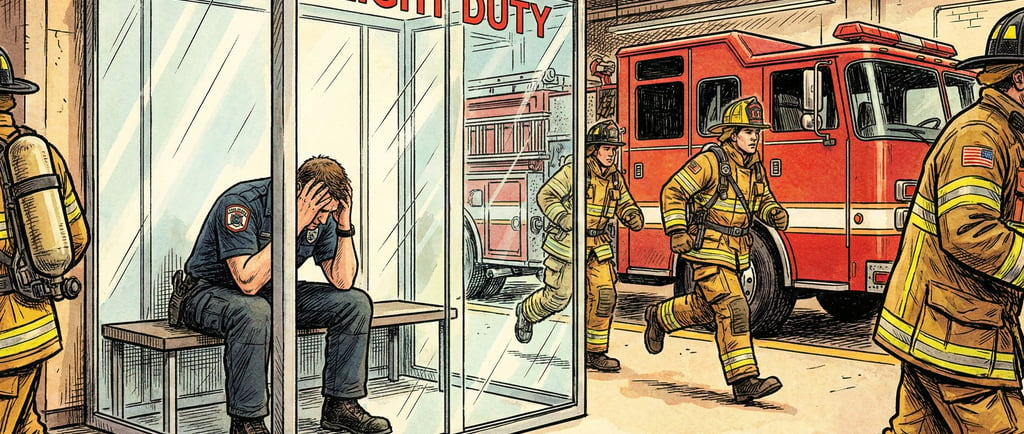
In every firehouse and precinct, there is a collective groan when the phrase "light duty" is mentioned. For the rank and file, it is often viewed as a penalty box—the dreaded desk assignment where careers go to stall, and autonomy goes to die. For command staff, it is frequently regarded as a lever—a tool to plug administrative holes, cut overtime costs, or gently nudge a member back into the field.
But this tug-of-war over light duty is creating a dangerous, silent crisis. By treating light duty as a punishment or a manpower stopgap, we are weaponizing recovery. The result isn't better staffing; it is a culture where short-term injuries are hidden until they become long-term, career-ending chronic conditions.
The Fear of the Desk
We have to be honest about why first responders hide injuries. It isn’t just about toughness; it’s about avoidance. Many high-performing firefighters and officers would rather limp through a shift in pain than face the monotony and perceived shame of a 9-to-5 administrative role. They fear losing their connection to the crew, losing their overtime, or being labeled "broken."
So, they don’t report the twisted knee or the tweaked back. They swallow a handful of ibuprofen, or something more substantial, and hop on the rig. This "suck it up" mentality works—until it doesn't. That ignored minor injury eventually compounds, often leading to the very chronic issues that force early retirement, and the very real risk of more self-destructive behaviors.
The Command Trap: Managing to the Lowest Common Denominator
On the other side of the desk, the administration faces real pressure. budgets are tight, and rosters are thin. It is tempting to look at the injured list and see a resource to be harvested. “If they can sit at a desk, they can work.”
There is also the elephant in the room that we all know exists: the "milkers." Every department has members who seem to turn a minor strain into a six-month vacation. We know who they are. The frustration of command regarding these individuals is valid.
However, many departments make the fatal mistake of building their entire injury policy around catching these few slackers. They make the return-to-work process aggressive and the light-duty assignment unpleasant, hoping to deter the malingerers.
The High Cost of Bad Precedent
Here is the hard truth leaders need to swallow: Is it worth breaking your best people to spite your worst?
When you weaponize light duty to force the "slacker" back to work, you set a precedent that terrifies your "thoroughbreds"—the dedicated members who actually need time to heal. If the culture dictates that reporting an injury leads to administrative misery or pressure to return prematurely, your best people will stop reporting injuries.
They will push through the pain to stay off the radar, aggravating their condition. Suddenly, you aren’t just missing a slacker for a few weeks; you are losing a seasoned, high-quality officer or firefighter to permanent disability because they were afraid to take two weeks off to heal properly.
Flipping the Script
We need to accept a difficult trade-off. In the long run, does it really hurt the team if the slacker is missing for a bit? Probably not. Their absence is rarely the morale blow we imagine.
But losing a top-tier mentor and operator because we rushed their recovery? That leaves a scar on the organization.
De-weaponizing light duty means shifting the narrative from "productive utilization" to "protected recovery."
For Command: Stop using light duty as a prod. Trust your medical professionals and give your people the psychological safety to say, "I'm hurt," without fear of retribution or reassignment to the basement.
For the Troops: We must stop stigmatizing those who step back to heal. Taking a month to rehab a shoulder the right way ensures you are good-to-go for another ten years, rather than a liability in six months.
We always want the good ones back. The best way to ensure they return—and stay—is to stop treating recovery like a game of chess and start treating it like what it is: an investment in the longevity of our most valuable assets.
Connect
Join the Iron Bison Herd for support and guidance.
CONTACT:
help@ironbisonresilience.com
913.205.5621
© 2025. All rights reserved.