order, Iron Bison Resilience: A Manual for Tactical Maintenance, now available on amazon
The 800-Pound Gorilla: Why We Can't Ignore the Link Between Pain and the Bottle
This post explores the overlooked connection between chronic physical pain and the alarmingly high rates of alcoholism among firefighters and law enforcement officers. It argues that by aggressively treating physical injuries in our ranks, we can remove a primary driver of self-medication and genuinely improve mental resilience.
Thomas E Gripp
1/25/20262 min read
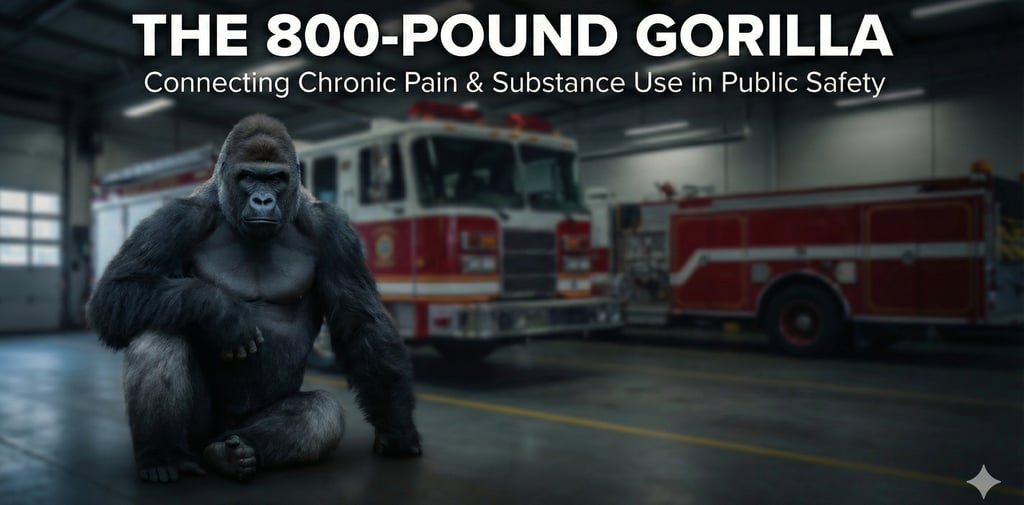
We need to talk about the 800-pound gorilla in the room—or rather, in the firehouse and the precinct.
For decades, the rates of alcoholism and binge drinking among firefighters and law enforcement officers have remained alarmingly high. It is an open secret in our professions. We joke about it, we normalize it as "blowing off steam," and we often look the other way until it becomes a career-ending—or life-ending—crisis.
We know the drivers: the trauma we witness, the hyper-vigilance required by the job, and a lingering "suck it up" work culture that often leaves us with zero healthy coping skills.
The Illusion of Progress To be fair, the conversation is changing. We are finally discussing mental health, PTSD, and peer support more openly than ever before. But we have to ask ourselves a hard question: Are we actually making progress on the numbers?
Talking about the problem is step one, but if the behavior in the ranks hasn't shifted, we are missing a critical piece of the puzzle. That piece is chronic pain.
The Vicious Cycle of Pain and Self-Medication When we talk about substance abuse in public safety, we almost exclusively frame it as a mental health issue. We talk about "numbing the memories." While that is true, we are ignoring the physical reality of the job.
Firefighting and law enforcement are physically brutal. We wreck our backs, blow out our knees, and carry cumulative injuries that follow us into retirement.
The Reality: High rates of chronic pain and injury are standard in our fields.
The Trap: Alcohol is the cheapest, most accessible, and socially acceptable painkiller available.
Many first responders aren't just drinking to forget what they saw; they are drinking to forget what they feel. The physical pain feeds the depression, which feeds the need for relief, leading to self-destructive behaviors. It is a feedback loop that destroys careers and families.
A New Approach to Resilience This is where our opportunity lies. If we want to move the 800-pound gorilla out of the room, we have to treat the whole responder.
If we aggressively address chronic pain—through better rehab, physical therapy, and mobility training—for both active duty and retirees, we remove one of the biggest triggers for substance abuse. We cannot expect someone to have "mental resilience" when their body is in constant distress.
The Bottom Line Let’s be clear: I am not saying you can’t enjoy an adult beverage. This isn’t about prohibition; it’s about survival.
Trying to exchange one problem (pain/trauma) for another (alcoholism) is dangerous math that never works in our favor. By addressing the physical pain that plagues our ranks, we have a real shot at reducing the alcohol-related issues that have haunted our professions for too long.
We have to stop treating the mind and the body as if they are two different employees. They are on the same shift, and they both need backup.
Connect
Join the Iron Bison Herd for support and guidance.
CONTACT:
help@ironbisonresilience.com
913.205.5621
© 2025. All rights reserved.