order, Iron Bison Resilience: A Manual for Tactical Maintenance, now available on amazon
Forging Ahead: When Your Worst Pain Day Doesn't Have to Mean a Bad Day
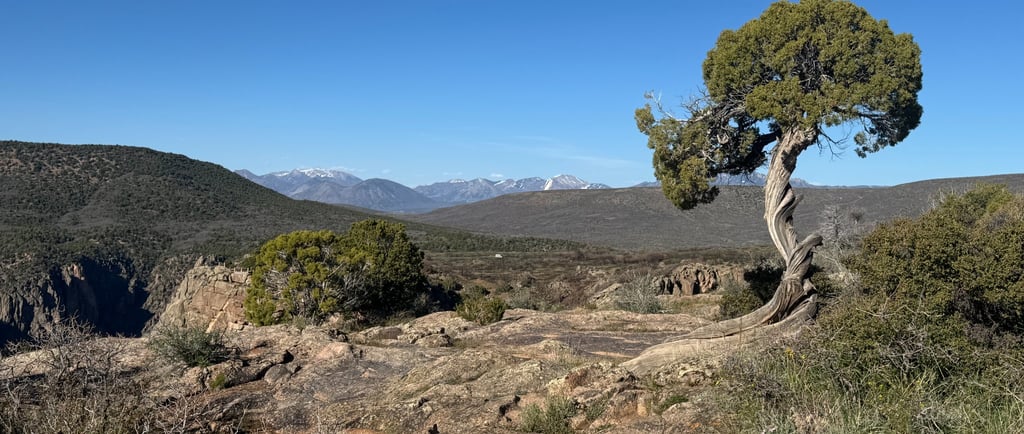
Waking up to an elevated baseline of physical suffering presents a critical choice between sheltering in place and choosing to forge ahead. During a recent family expedition to the Black Canyon of the Gunnison National Park, I utilized the core Iron Bison resiliency tools to prevent a severe neuralgia flare-up from dictating my boundaries. Because trying to control your pain is a set-up for failure, you must instead manage your capacity to cope and adapt to environmental stressors, ensuring that a high-pain day does not defeat you.
Thomas E Gripp
7/6/20263 min read
We’ve all been there. You wake up, and before your feet even hit the floor, you know. Today is going to be a high-pain day. For me, when my neuralgia flares up, even the simple sensation of sunlight hitting my face can completely dampen the moment—if I let it.
Recently, my family and I took our travel trailer out to the mountains. I had taken time off, driven 13 hours to get there, and loved every single minute of the trip. But there was one specific day—the day we planned to visit the spectacular Black Canyon of the Gunnison National Park (a trip I highly recommend to absolutely everyone)—where I woke up fighting an elevated baseline of pain.
In that moment, I faced a choice: Do I delay leaving? Do I stay behind and shelter in the camper?
Absolutely not.
I didn’t drive 13 hours to sit inside a metal box. I chose to forge ahead. And by applying the core Iron Bison resiliency tools, that high-pain day turned into a truly great day. Here is how you can use those same tools to ensure your pain doesn’t define your life.
1. Recognize the Coping Threshold (The Stress-Pain Connection)
Often, a spike in our suffering isn't just about the physical pain increasing; it’s that our ability to cope has been compromised. Vacation and relaxation naturally give our coping mechanisms a massive boost. Back in the daily grind, factors like stress, fatigue, and poor diet lower our tolerance, making the baseline pain feel insurmountable.
When you recognize that pain management is largely about maintaining your capacity to cope, you can start controlling the variables that wear you down.
2. Pack Your Shield: Preparation and Adaptation
To keep living your life on a rough day, you have to adapt to the terrain. You don't ignore the pain; you outsmart it. On the day we hit the canyon, I took a tactical approach to my physical stressors:
Mitigating Side-Effects: I made sure to carry the medications I needed, knowing I couldn't let my chronic abdominal issues aggravate my neuralgia and tank my day further.
Adapting to the Environment: I realized I had made the "genius" move of forgetting my wide-brimmed hiking hat. Instead of throwing in the towel, I wore the hat I had, and throughout the day I consciously avoided letting the direct sun hit my face as much as possible, which further aggravated my neuralgia. There were ups and downs with this strategy, but it kept my pain levels mostly tolerable.
Fueling the Fight: I stayed strictly hydrated and kept protein snacks on hand to stay sated. Additional physical stressors would exacerbate the situation. Physical stressors like dehydration and hunger wear down your battery. When your body is starved or dehydrated, your tolerance plummets, and the pain wins. Fueling yourself properly keeps your defensive walls high.
3. Do Not Let the Pain Define the Day
If I had stayed in my camper that morning, I still would have hurt. The pain wasn't going to magically disappear just because I was lying down.
By choosing to move forward—prepared and fully cognizant of what could make the day worse—something incredible happened: the pain actually lessened.
Because I stepped out into the National Park, took in the vistas, and hiked, I relaxed. I got some exercise. I adventured. Most importantly, I enjoyed my family and took in the breathtaking views of a stunning national park. Because I refused to define myself by my physical limitations that morning, I actually gave my brain something else to focus on.
The Bottom Line
Living a resilient life doesn't mean pretending you don’t hurt. It means refusing to let that hurt dictate your boundaries.
The next time you wake up and the pain is screaming, don’t shelter in place. Pack your gear, manage your physical stressors, adapt where you must, and keep moving forward. You might just find that your worst pain day can still be a truly great day.
Connect
Join the Iron Bison Herd for support and guidance.
CONTACT:
help@ironbisonresilience.com
913.205.5621
© 2025. All rights reserved.