order, Iron Bison Resilience: A Manual for Tactical Maintenance, now available on amazon
Not in a Vacuum: The Patient Who Changed My Perspective on Pain
Reflecting on his own grueling recovery from illness and nerve damage, Thomas E. Gripp recounts how a jarring memory of a patient’s preventable decline into immobility inspired him to fight for his own future. This post establishes the origin of Iron Bison Resilience, urging readers to reject the temptation of sedentary comfort and instead actively manage their pain to avoid the trap of self-surrender
Thomas E Gripp
2/8/20263 min read
Iron Bison Resilience was not created in a vacuum. It was not born out of a textbook, a seminar, or a sudden flash of inspiration in a quiet room. It was born of life experience—specifically, a collision between my career as a firefighter and a grueling personal recovery that spanned from 2019 to 2021.
As many of you know, my journey involved a cascade of medical crises—cancer, surgeries, and nerve damage that threatened to end my career and leave me disabled. But during those long months of recovery, when the pain was at its peak and the future was uncertain, my mind kept drifting back to a specific medical call from years prior. It was a memory that haunted me, but ultimately, it fueled my refusal to surrender.
The Ghost of Future Past
Long before chronic pain became a part of my everyday life, I responded to a medical incident that seemed routine on the surface but revealed a tragedy upon closer inspection.
Our patient was wheelchair-bound. As we assessed her, I looked for the typical markers of what put her there—a stroke, a traumatic injury, a severe neurological disease. I found none. Confused, I asked a family member about her history. The answer I received was far more dramatic than the emergency itself.
The family member explained that there was no catastrophic medical event. The patient had retired just four years earlier. At the time of her retirement, she was mobile but suffering from nagging hip and back pain—the kind of wear and tear many of us in public safety accept as the price of the job.
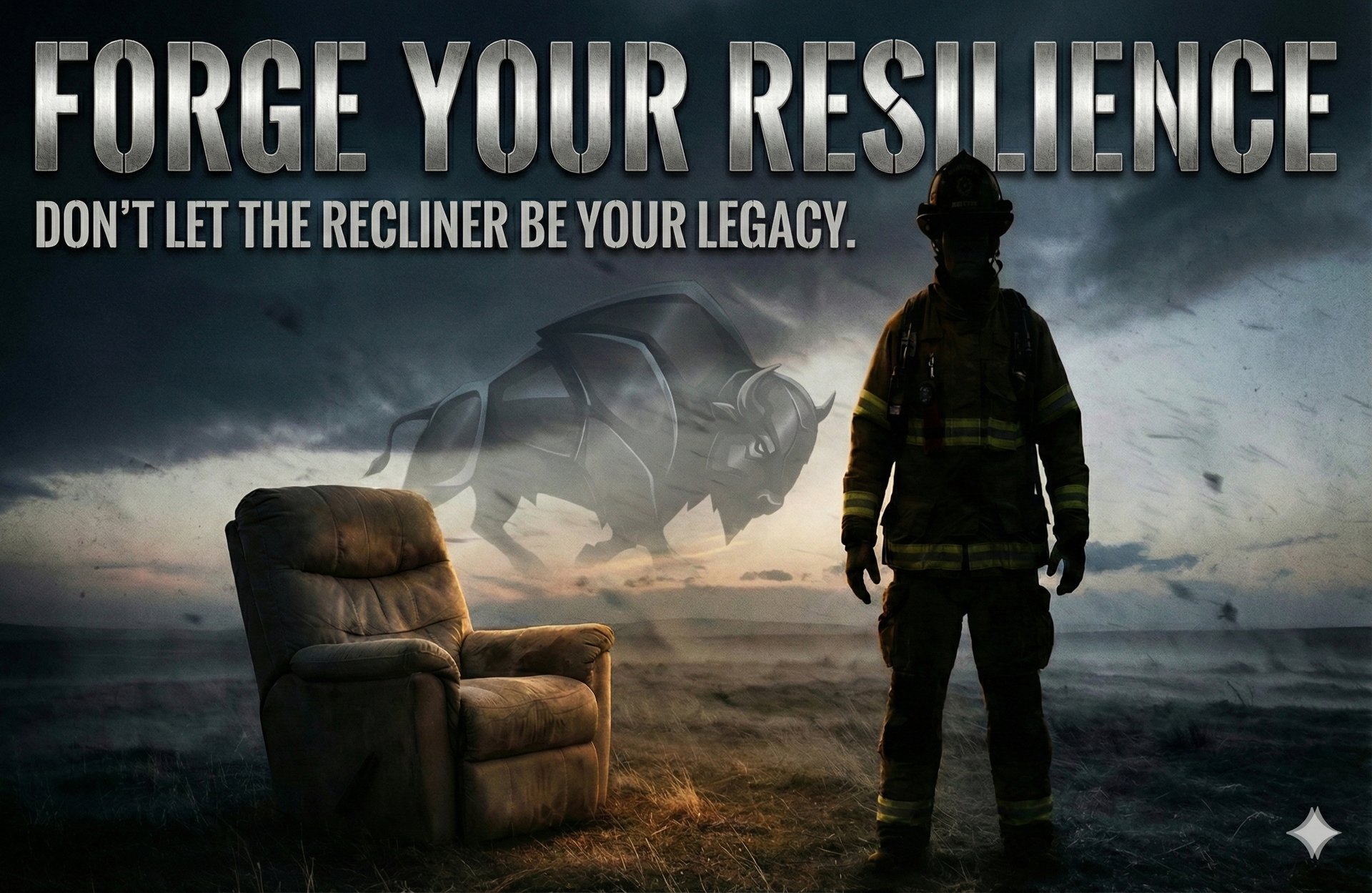
Instead of addressing the pain constructively, she had settled into a recliner. She sought comfort in immobility. She refused to move, refused to engage in rehabilitation, and let the pain dictate her boundaries.
In just four years, that recliner became her prison. Her muscles atrophied, her joints froze, and her world shrank to the size of her living room. She became handicapped not by an acute injury, but by a decision to stop moving.
The Pattern of Surrender
Lying in my own hospital bed years later, facing the prospect of a long recovery or no full recovery at all, that patient’s face came back to me. With time to contemplate, I began recalling other regular patients and acquaintances I had encountered over my career who fit the same pattern.
I realized this wasn't an isolated incident. It is a silent epidemic in our community. I have seen too many brothers and sisters leave our profession and slide into sedentary lifestyles, drug dependency, or isolation. They view retirement as a finish line where they can finally stop fighting, but when you stop fighting the pain, the pain conquers you.
That patient in the wheelchair didn't choose to be disabled. She chose comfort in the moment, over and over again, until she had no choice left.
The Choice to Forge
In 2021, when the challenge of chronic pain and a vestibular disorder threatened my career, that memory terrified me. As I learned to manage my challenges, my mission began to clarify. I realized that if I let my own pain drive me into the recliner—if I sat idle and waited for the storm to pass—I would end up exactly like him.
I knew that "hard work is worth doing.” I decided that I was not going to retire, be forced to retire, or quit thriving simply because I was unlucky. I had to apply my TEE—Training, Education, and Experience—to my own body.
Iron Bison Resilience exists because I refused the recliner. It exists to warn others that the slide into disability is often a slow, quiet surrender that happens when we ignore our maintenance.
Pain does not have to be the end of a life well-lived. But avoiding that fate requires active, sometimes painful, engagement with your reality. It requires forging tools, not making excuses.
Don’t let the recliner be your legacy. If you are hurting, stand up. If you are struggling, reach out. The storm is here, but so are you. Let’s face it on our feet.
Connect
Join the Iron Bison Herd for support and guidance.
CONTACT:
help@ironbisonresilience.com
913.205.5621
© 2025. All rights reserved.