order, Iron Bison Resilience: A Manual for Tactical Maintenance, now available on amazon
The Graveyard of Good Intentions
This blog post critiques the common failure of New Year's resolutions by mid-February, arguing that lasting change stems from necessity and daily commitment rather than arbitrary calendar dates. It specifically encourages readers managing chronic pain to adopt an "Iron Will" focused on adaptation and resilience, replacing fragile wishes with a sustainable lifestyle mission.
Thomas E Gripp
2/15/20263 min read
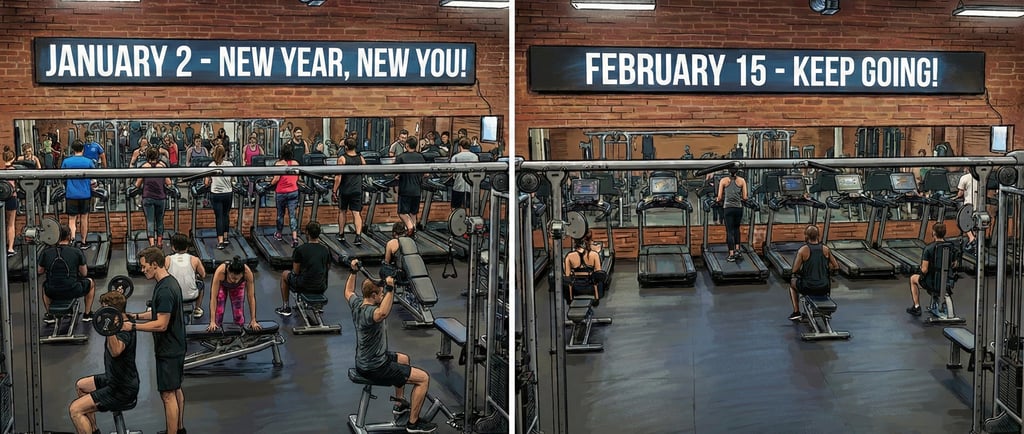
If you walked into a gym six weeks ago, you probably had to wait in line for a treadmill. The weight benches were full, the classes were packed, and the air was thick with the scent of optimism (and new sneakers).
Today is February 15th. Walk into that same gym today, and you’ll likely hear your own footsteps echo.
The statistics are brutal, but they aren't surprising. Research suggests that approximately 80% of New Year’s resolutions have failed by the second week of February. By this mark, the "new year, new me" energy has evaporated. The gym memberships are going unused, the weight benches are collecting dust, and those ambitious books on self-improvement remain unread on the nightstand.
Why? Because January 1st is just a date. It’s a calendar flip. It is not a catalyst for the kind of profound, structural change required to navigate life’s most complex challenges.
Resolutions vs. Resilience
The problem with a New Year's resolution is that it is often born out of tradition or guilt rather than necessity. We resolve to change because we feel we should. But when the alarm goes off at 4:30 AM on a cold Tuesday in February, "should" isn't enough to get you out of bed.
Real life change—the kind that sticks—doesn't come from a holiday. It comes from a realization. It comes from a need.
For those of us living with chronic pain, we don’t have the luxury of "resolutions." We don't wake up and decide to manage our pain because it's the start of a new year. We do it because the alternative is unacceptable. We do it to survive, and ultimately, to thrive.
The Iron Will to Adapt
At Iron Bison Resilience, we talk about Iron Will. Iron Will isn't about hype. It isn't about posting a selfie with a protein shake. It is the quiet, gritty determination to keep moving forward when your body is screaming at you to stop.
If you are dealing with chronic pain—whether from injury, illness, or the wear and tear of a service life—you know that a "resolution" to "feel better" is a trap. Attempting to control pain is a setup for failure. You cannot resolve your way out of a physiological reality.
Instead, you must build a lifestyle around adaptation.
Real change requires accepting that the "old you" might be gone, but a "new you" is waiting to be built. It requires following a different set of rules—not the ones you make on New Year's Eve, but the ones you live by every single day:
1. Adapt: If you can't lift heavy today, lift light. If you can't run, walk. If you can't walk, stretch. The method changes, but the mission remains.
2. Rest and Reduce: Pushing through pain until you break isn't toughness; it's negligence. Real strength is knowing when to throttle back so you can fight another day.
3. Keep Living: Chronic pain can easily become a prison of isolation. The most radical change you can make is to refuse to let pain define your identity.
Beyond the Calendar
Suppose your New Year's resolutions have already fallen by the wayside. Good. Let them go. They were likely fragile wishes anyway.
Replace them with a mission.
If you are hurting today, if you are struggling to find your footing, stop looking at the calendar. Look at your life. The need to change—to eat better, to move smarter, to manage your stress—didn't arrive with the New Year. It came with the realization that you have more to give, more to do, and more life to live.
Hard things are worth doing. Not because it's January, but because you are worth the effort.
Stay resilient.
Connect
Join the Iron Bison Herd for support and guidance.
CONTACT:
help@ironbisonresilience.com
913.205.5621
© 2025. All rights reserved.